
If you've ever blown out a candle and watched a trail of black smoke drift across the room, you already know what a wick dipper is used for, you just haven't met one yet. This simple tool eliminates that smoky aftermath by curling the lit wick down into the melted wax pool, snuffing the flame cleanly without the soot, smell, or splatter.
At Coorong Candle Co., we hand-pour every soy candle with care, from the natural wax blend right down to the lead-free cotton wick. So it only makes sense that we'd want you to know how to look after that candle properly once it's in your home. A wick dipper is one of the easiest ways to do exactly that, and it takes about two seconds to use.
Below, we'll cover what a wick dipper actually is, how to use one correctly, the benefits it offers for your candle's lifespan and your air quality, and whether it's worth adding to your candle care routine. Short answer: it is.
What a wick dipper is and how it works
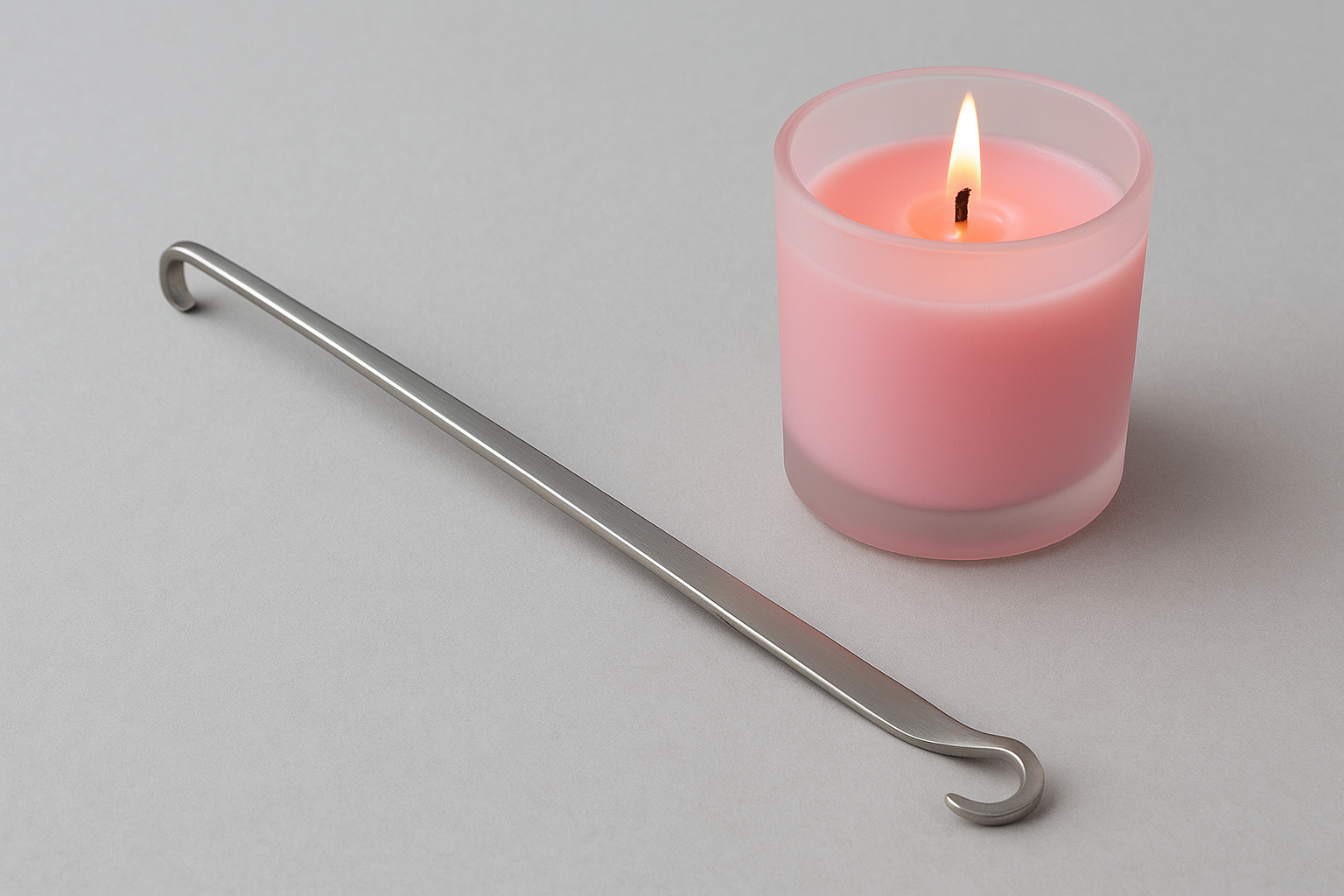
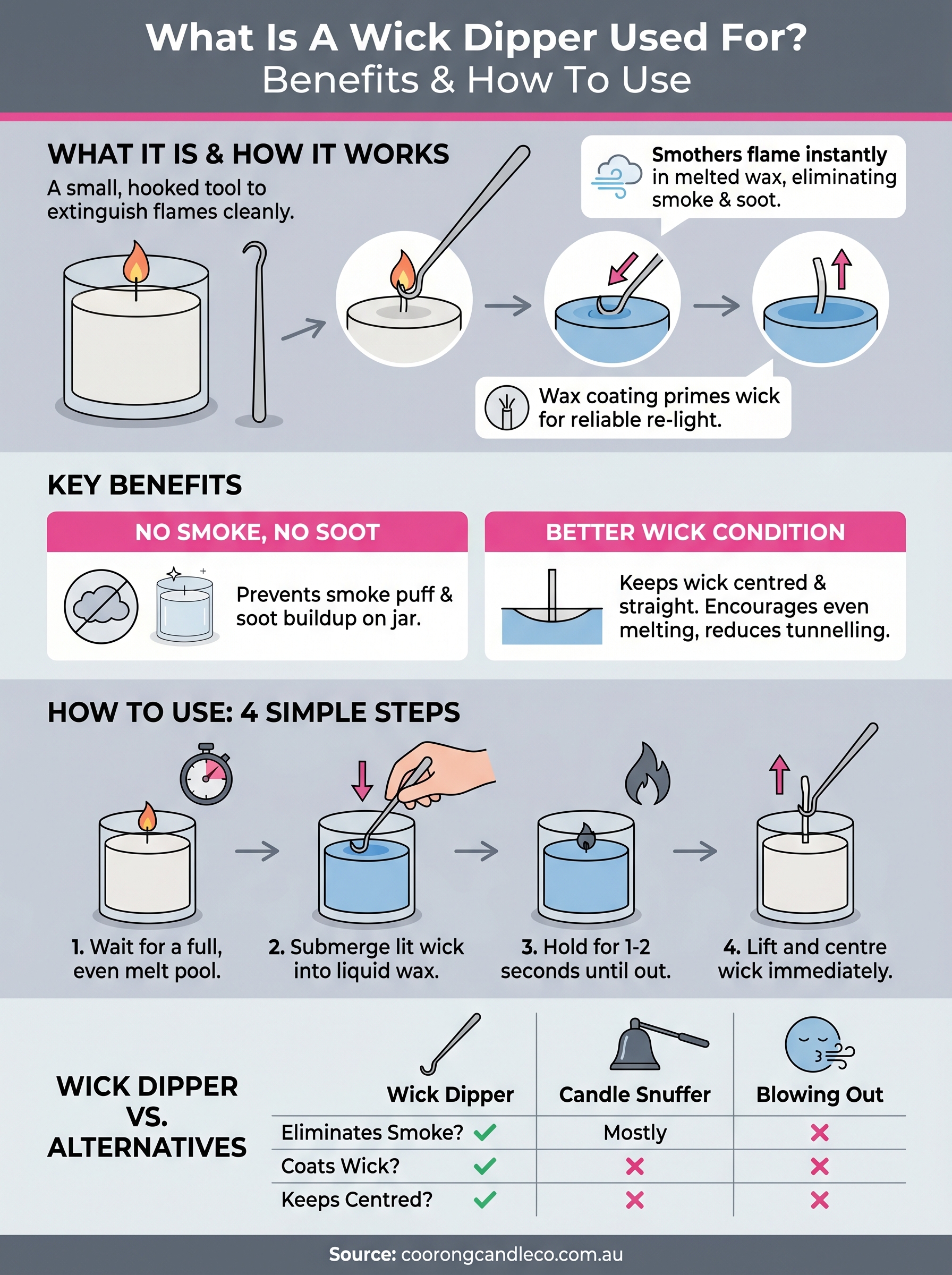
A wick dipper is a small, hooked metal tool designed specifically for extinguishing candle flames. It typically looks like a long, slender rod with a curved or angled tip at one end. You use that tip to physically push the burning wick down into the melted wax pool, which smothers the flame instantly. Once the flame is out, you lift the wick back upright so it's ready for the next burn.
The anatomy of a wick dipper
Most wick dippers are made from stainless steel or brass, which means they handle heat without warping or corroding over time. The handle is long enough to keep your fingers well away from the flame, usually around 15 to 20 centimetres. The hook or bent tip at the end is the working part of the tool: it slots neatly under or around the wick so you can guide it down smoothly without snapping or tangling the cotton fibres.
The dipping mechanism explained
When you understanding what a wick dipper is used for, the key is the wax coating that happens during the dip. As the wick submerges into the liquid wax, it gets coated in a thin layer of wax on its way back up. This coating does two things: it primes the wick for an easier re-light next time, and it holds the wick centred and upright as the wax re-solidifies around it.
This wax coating is why candles extinguished with a wick dipper tend to light more reliably on the next burn compared to candles blown out repeatedly.
The whole process takes only a couple of seconds and leaves your candle in better condition than almost any other extinguishing method.
Why use a wick dipper
Once you understand what a wick dipper is used for, the reasons to add one to your candle routine become obvious. The main benefits come down to air quality, candle longevity, and keeping your surfaces clean.
No smoke, no soot
Blowing out a candle sends a puff of black smoke into the room and leaves a thin layer of soot on the inside of the jar over time. A wick dipper cuts that off entirely. When the flame is smothered in wax, there is no combustion residue, which means cleaner air in your home and a jar that stays looking good burn after burn.
Soot buildup inside a candle jar is one of the most common signs that a candle is being extinguished incorrectly.
Better for the wick itself
Repeated blowing can bend or shift the wick, pulling it off-centre so it burns unevenly on the next use. Using a dipper keeps the wick straight and centred every single time, which leads to a more even melt pool and less wasted wax around the edges. Here is what consistent wick dipper use does for your candle over time:
- Reduces tunnelling by encouraging an even melt pool
- Extends total burn time by preventing wick drift
- Primes the wick with a fresh wax coat for a reliable re-light
How to use a wick dipper step by step
Using a wick dipper correctly takes almost no effort, but following the right order matters. The goal is to submerge the wick fully into the melt pool and lift it back out before the wax hardens around it. Getting that sequence right keeps your wick primed and centred for the next burn.
The process from start to finish
Once you know what a wick dipper is used for, the actual technique is straightforward. Wait until you have a full, even melt pool before extinguishing, as this gives the wick enough liquid wax to dip into cleanly.
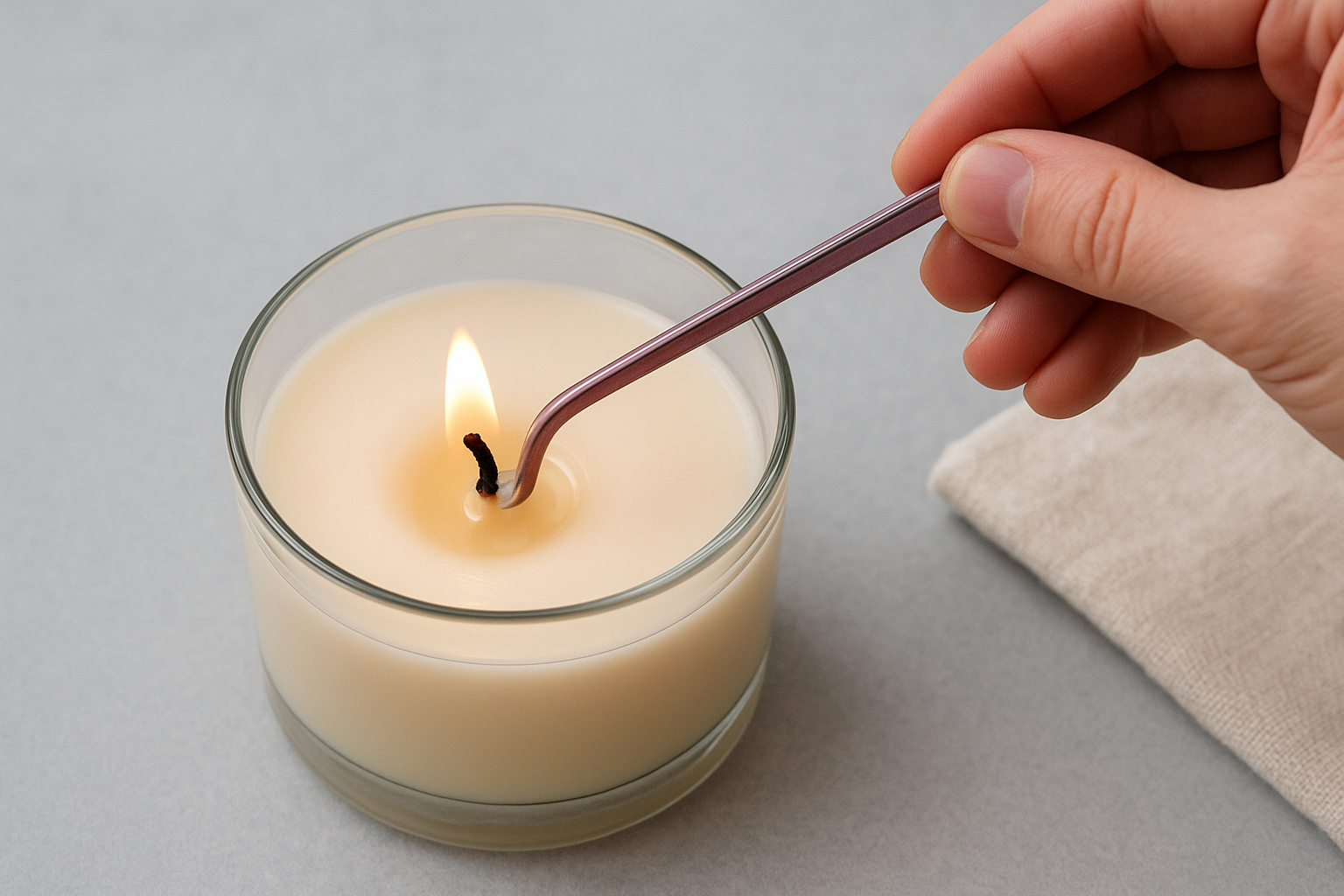
- Hook the tip of the dipper around the base of the wick
- Slowly push the wick down into the melted wax pool
- Hold it submerged for one to two seconds until the flame is out
- Lift the wick back upright while it's still soft
- Wipe the dipper clean with a dry cloth before storing
Lifting the wick immediately after extinguishing keeps it centred and prevents it from sticking flat against the wax as it cools.
Your dipper will sometimes pick up traces of wax on the tip after each use. A quick wipe while the wax is still warm keeps the tool clean and ready for next time.
Wick dipper vs snuffer vs blowing out
You have three realistic ways to extinguish a candle: a wick dipper, a candle snuffer, or simply blowing it out. Each method has a different impact on your wick condition, your wax surface, and the air quality in your room.
| Method | Eliminates smoke | Coats the wick | Keeps wick centred |
|---|---|---|---|
| Wick dipper | Yes | Yes | Yes |
| Candle snuffer | Mostly | No | No |
| Blowing out | No | No | No |
Candle snuffer: the close competitor
A snuffer extinguishes the flame by placing a bell-shaped cap over it, cutting off the oxygen supply. This avoids most of the smoke you get from blowing, but it skips the wax-coating step entirely, leaving the wick untreated and more prone to drifting off-centre over time.
Once you understand what a wick dipper is used for, the snuffer's gap becomes obvious. It puts the flame out, but it does nothing to prime the wick for the next burn.
A wick dipper is the only method that extinguishes the flame and actively improves the wick's condition at the same time.
Why blowing out falls short
Blowing out a candle is the most disruptive habit for your wick long-term. The force of your breath bends cotton fibres, sends soot into the air, and can scatter hot wax across the surface.
Repeated blowing gradually shifts the wick off-centre, which leads to uneven melting, tunnelling, and a shorter overall burn life for your candle.
Safety, cleaning and common mistakes
A wick dipper is a straightforward tool, but a few basic safety habits and regular cleaning steps will keep it working well and protect both your candle and your surfaces.
Keep heat and distance in mind
Always work with steady hands and allow the melt pool to reach the edges of the jar before extinguishing. Trying to dip into a shallow or partially melted pool means less liquid wax to coat the wick, which reduces the benefit of using the tool.
Never leave a burning candle unattended, and always place it on a heat-resistant surface before you reach in with your dipper.
Cleaning and common mistakes to avoid
Wax builds up on the dipper tip quickly, so wipe it with a dry cloth while the wax is still warm after each use. Once the wax hardens, it takes longer to remove cleanly.
The most common mistakes people make once they understand what a wick dipper is used for are:
- Dipping too quickly before a full melt pool forms
- Forgetting to lift the wick back upright before the wax sets
- Storing the dipper without wiping it clean first
Final thoughts
Now that you know what a wick dipper is used for, you have everything you need to get more out of every candle you burn. It's a small, simple tool that protects your wick, keeps your air clean, and extends the life of your candle with almost no effort on your part.
The difference between a candle that lasts well and one that tunnels, smokes, or burns unevenly often comes down to how you extinguish it. A wick dipper solves that problem in one smooth motion, and once you start using one, blowing out a candle will feel like going backwards. Your wick stays centred, coated, and ready for the next burn every single time.
If you're ready to pair your new routine with a candle worth the extra care, browse our hand-poured natural soy candles and find a fragrance that suits your space.