
Walk into any homewares store and you'll see shelves packed with candles promising the same thing: a cosy home and a clean burn. Most won't deliver either. If you've ever lit a cheap candle and ended up with black soot on your wall or a headache from the fumes, you already know why so many Australians are switching to soy wax candles.
So what actually makes a candle a soy wax candle, and how do you pick a good one? In short, it comes down to what's in the wax, what's in the wick, and how the scent is blended. Pure soy wax burns cleaner and slower than paraffin, and when you're shopping for soy wax candles Australia wide, checking the wax content and wick material tells you more than any marketing label will.
This article breaks down what soy wax actually is, how 100 soy wax candles differ from blended alternatives, and what separates a well-made scented soy wax candle from a supermarket imitation. We'll also cover what to look for if you're browsing soy wax candles for sale, so you can buy with confidence rather than guesswork.
Why choose soy wax over other candle waxes
Soy wax comes from soybean oil, a renewable crop grown across the US and increasingly processed here in Australia. Producers hydrogenate the oil to turn it solid, which gives you a wax that's biodegradable and free of the petroleum residue found in cheaper candles. Paraffin wax, by contrast, is a byproduct of crude oil refining, and the pros and cons of soy versus paraffin candles start right there with the raw material. When you burn it, you're burning a fossil fuel in your living room, and that shows up as soot on your walls, your ceiling, and the inside of your lungs.
Cleaner burn, fewer nasties
Burning paraffin releases compounds like toluene and benzene into your air, the same chemicals found in vehicle exhaust, which is the starting point for anyone asking whether soy wax candles are toxic. Soy wax doesn't carry that baggage. A well-made soy wax candle burns at a lower temperature and produces roughly 90% less soot than paraffin, which means your walls stay clean and your air stays breathable. This matters most if you're burning candles daily for ambience or aromatherapy, where you're inhaling whatever the wax releases for hours at a time.
A soy candle won't leave black soot creeping up your wall or a chemical haze hanging over your lounge room.
How soy stacks up against beeswax and coconut wax
Beeswax and coconut wax are the other two natural contenders you'll see marketed as alternatives to paraffin. Beeswax burns beautifully but carries its own faint honey scent, which competes with added fragrance oils. Coconut wax burns clean and holds scent well, but it's expensive to produce at scale and often gets blended with soy anyway to improve structure. Here's how the main options compare:
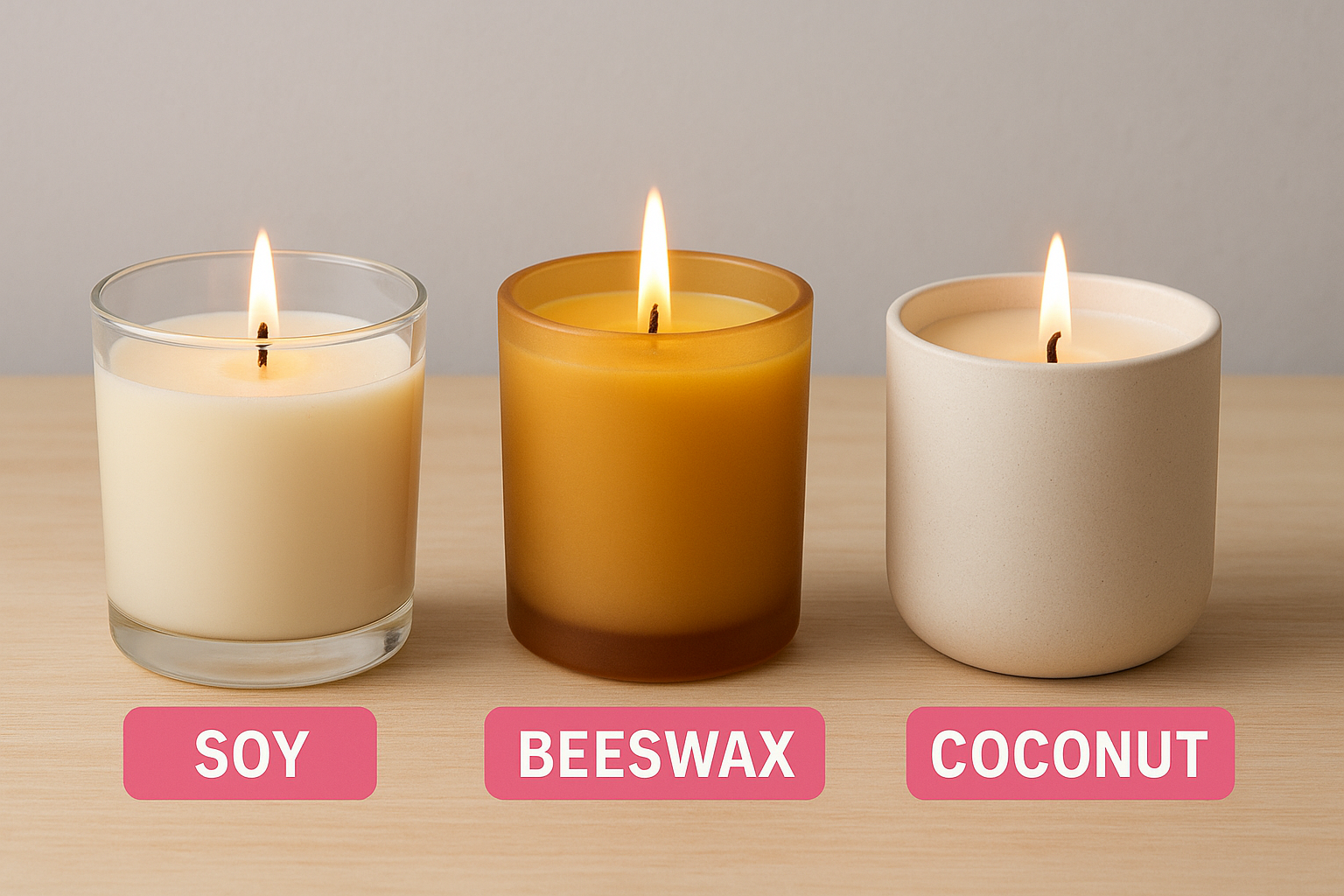
| Wax type | Source | Soot level | Scent throw | Typical cost |
|---|---|---|---|---|
| Soy wax | Soybean oil (renewable) | Very low | Strong, clean | Moderate |
| Paraffin | Crude oil byproduct | High | Strong but chemical | Low |
| Beeswax | Bee hives | Low | Mild, honey-scented | High |
| Coconut wax | Coconut oil | Very low | Strong, clean | High |
Slower burn, better value over time
Growers and candle makers also favour soy because of its melting point, which sits lower than paraffin's. That lower melting point means soy wax burns slower and cooler, so a 100 soy wax candle will typically outlast an equivalent paraffin candle by several hours, and burn hours by candle size are worth checking before you compare prices. You get more evenings of use from the same jar, and the scent releases more evenly instead of blasting out in the first ten minutes and fading fast. If you've ever bought a candle that smelled incredible in the shop but disappeared within a week of burning, chances are it was paraffin or a heavy blend cutting corners on wax quality.
Environmental impact rounds out the case. Soybeans are a renewable crop, and soy wax breaks down naturally, while paraffin leaves behind petrochemical residue that doesn't decompose the same way. For Australian buyers who care about where their home products come from and what happens after the candle burns out, that difference matters as much as the scent itself. It's also why brands producing soy wax candles Australia wide lean on soy content as their main selling point rather than fragrance alone, because the wax is doing most of the work long before you strike a match.
How to choose the right soy wax candle for your home
Picking the right candle isn't just about grabbing whatever smells nicest at the counter. Room size and scent strength need to match, or you'll end up with a fragrance that either disappears in a large living room or overwhelms a small bathroom. A 350g candle suits an open-plan lounge or bedroom, while a 165g soy travel candle tin is better suited to a bathroom, hallway, or desk where you want a subtler presence rather than a full room-filling throw.
Match fragrance families to the room
Consider what each space is actually used for before you commit to a scent. Coastal and botanical notes are among the best candle scents for a living room where you want something fresh and easygoing, while warmer, woodier blends suit bedrooms and studies where you're after a calmer, more grounding atmosphere. Kitchens do best with citrus or herbal notes that cut through cooking smells rather than compete with them.
- Living rooms: coastal, floral, or green botanical scents
- Bedrooms: warm, woody, or musk-based blends
- Bathrooms: light florals or citrus in a travel tin size
- Kitchens: citrus, herbal, or lightly spiced notes
The right scent depends on the room it's burning in, not just what smells good in the jar.
Check the wax content before you buy
Labels matter here more than most buyers realise. A candle marketed as soy might only contain 40% soy wax blended with paraffin fillers, so it pays to know how soy candle wax grades differ and to look for 100 soy wax candles specifically if purity is your priority. Genuine scented soy wax candles list their wax content clearly, and reputable makers aren't shy about stating it because it's their main point of difference from mass-market brands.
Think about how you'll actually use it
Gifting and everyday use call for different choices. If you're buying for someone's home rather than your own, an indulgence gift set pairing a candle with a reed diffuser gives more variety without you having to guess their exact scent preference. For your own space, start with a travel tin in a new fragrance before committing to a full-size jar, so you're not stuck with a scent that doesn't suit the room once it's burning.
How to get the best burn from a soy wax candle
Buying a well-made candle is only half the job. Soy wax has memory, meaning the first time you burn it sets the pattern for every burn after. Get that first burn wrong and you'll be stuck with a candle that tunnels down the middle, wasting wax and shortening the life of something you paid good money for. Get it right, and a 100 soy wax candle will burn evenly right down to the base, releasing scent consistently instead of fading halfway through the jar.
Your first burn decides how every burn after it behaves, so don't rush it.
Give it a full melt pool on the first burn
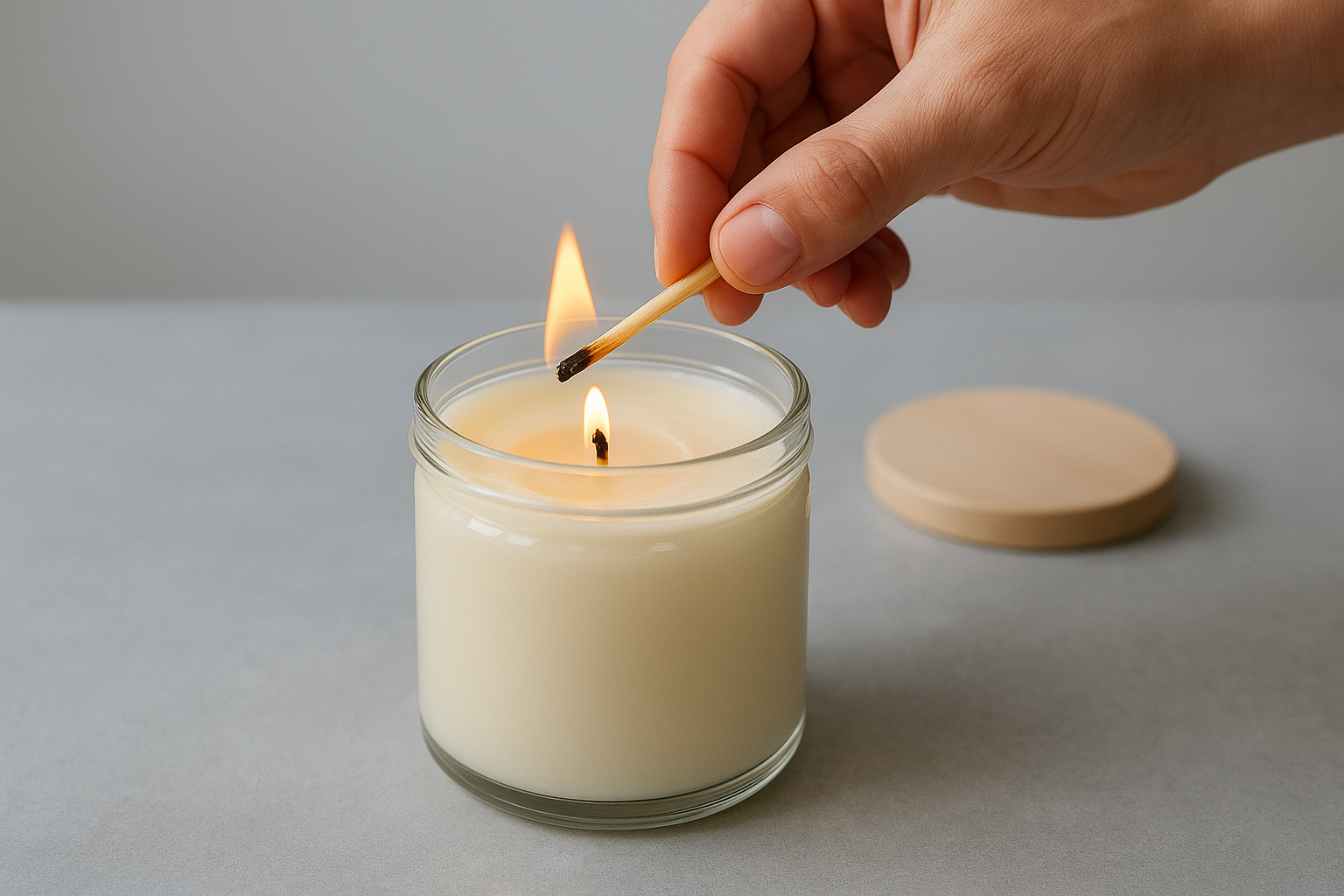
Light your candle and let it burn until the melted wax reaches the edges of the container, not just the centre. This usually takes two to three hours depending on the jar size. Blowing it out early locks in a tunnel that gets deeper every time you relight it, and while there are ways to fix candle tunnelling afterwards, no amount of trimming fixes that once it's set.
Trim the wick before every burn
A long wick creates a bigger flame, more soot, and faster wax consumption. Keep the wick trimmed to around 5mm before each burn using proper wick trimmers or clean scissors, following the quarter-inch wick trimming rule, and remove any carbon build-up ('mushrooming') from the tip. This one habit does more for burn quality than anything else on this list.
- Trim to 5mm before lighting
- Remove debris or wick trimmings from the wax pool
- Never burn a candle for more than four hours at a stretch
- Let the wax fully re-set before relighting
Keep it away from drafts and direct sun
Soy wax is soft compared to paraffin, so heat and airflow affect it more noticeably. Placing a scented soy wax candle near a window, air vent, or fan causes uneven melting and can dull the fragrance throw altogether, since moving air disperses the scent before it fills the room. Storing unused candles away from direct sunlight also protects the wax from discolouring and keeps the fragrance oils from breaking down before you've even lit the wick.
What to look for when buying soy wax candles in Australia
Shopping for soy wax candles for sale online means you can't smell or touch the product before you buy, so you're relying entirely on what the seller tells you. Look past the marketing photos and check three things: wax content, wick material, and where the candle was actually made. A brand that's confident in its product will list all three without you having to dig through an FAQ page.
Check the wick and container materials
Cotton wicks burn cleaner than the metal-core wicks still used in some budget candles, and lead-free cotton is the standard you should insist on for anything you're burning indoors regularly. Glass jars and tins also matter more than people realise, since a poorly sized container causes uneven melting no matter how good the wax is. Coorong Candle Co. uses lead-free cotton wicks across its range of natural soy candles, poured into containers sized to match the wax volume so you get an even burn from first light to last.
If a seller won't tell you what's in the wick, assume it's not cotton.
Compare Australian-made against imported stock
Candles made overseas and shipped in bulk often sit in warehouses for months before reaching a shelf, which weakens fragrance throw by the time you buy them. Locally poured soy wax candles Australia wide tend to be fresher, since small-batch producers make to order rather than stockpiling, which is why most Australian-made soy candle picks come from smaller studios. Buying local also means your money supports Australian small businesses rather than an overseas supply chain, which matters if that's part of why you're choosing handmade over supermarket brands in the first place.
Look for clear sizing and shipping terms
A reputable Australian seller states weight, burn time, and shipping costs upfront rather than burying them at checkout. Use this quick checklist before you buy:
- Wax content stated clearly (aim for 100% soy where purity matters)
- Lead-free cotton wick confirmed
- Made in Australia, with a stated location or region
- Burn time listed, not just candle weight
- Free shipping threshold or flat-rate delivery clearly shown
Getting these details right before you order saves you the disappointment of a candle that tunnels, fades fast, or arrives weeks after you needed it.
Finding a soy candle that suits you
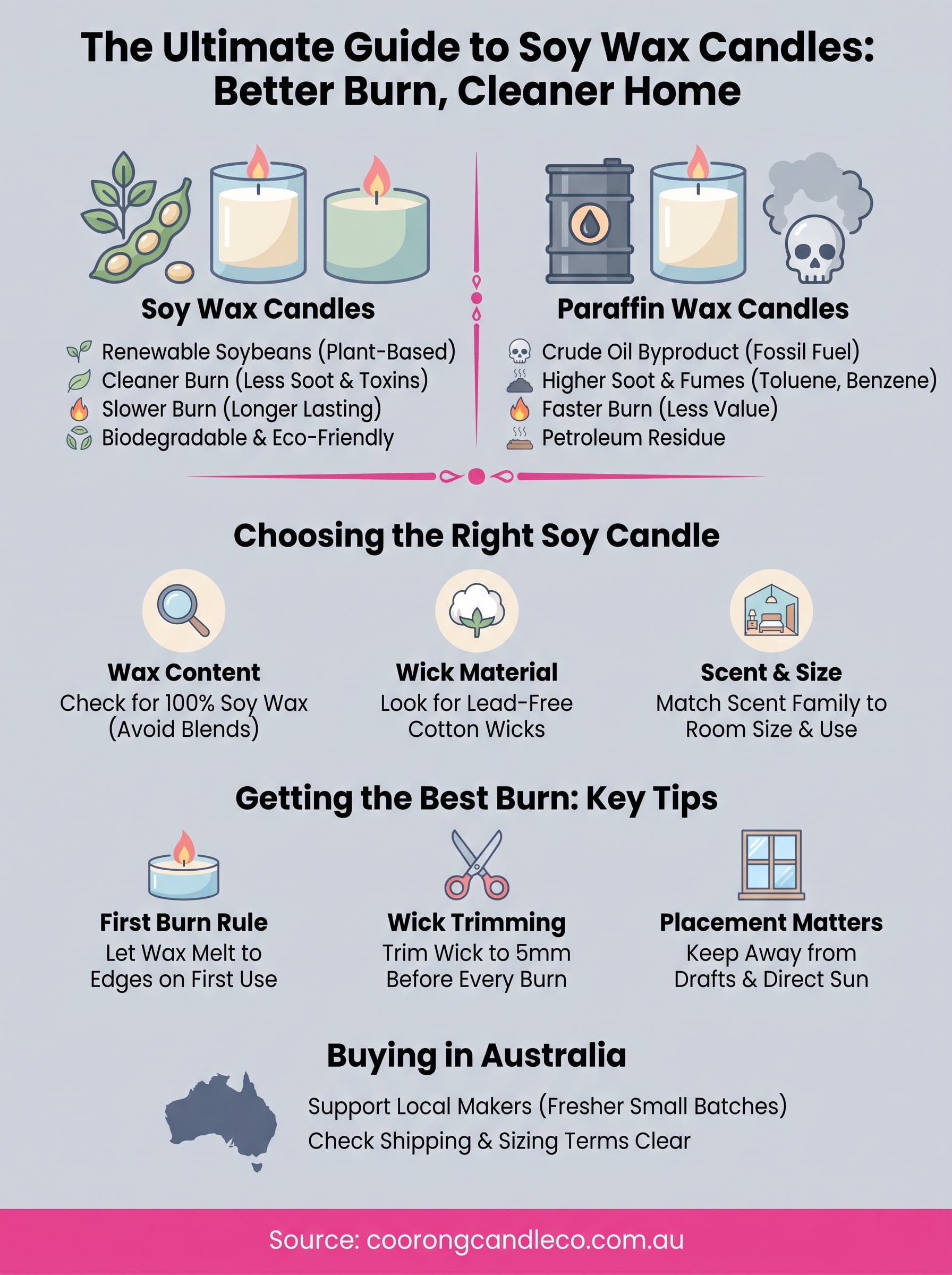
Good soy wax candles come down to three things: pure wax content, a lead-free cotton wick, and a scent chosen to match the room it's burning in. Get those right, and you'll notice the difference within the first burn, cleaner air, longer wax life, and a fragrance that fills the room instead of fading by week's end. Skip the mass-market blends and check the label before you buy, because the details you can't see in a product photo are the ones that determine whether a candle lasts three evenings or thirty.
Hopefully you now know exactly what separates a genuine soy candle from an imitation, and what to check before you commit. If you're ready to see the difference for yourself, browse the natural soy wax XL candles hand-poured in South Australia, and find a scent that actually suits your home.