
Walk into a room that smells right and you notice it straight away, even if you can't say why. A good reed diffuser does that work quietly, day after day, without a flame to watch or a wick to trim. If you've bought one before and found the scent fading after a fortnight, or the sticks doing nothing at all, you're not imagining it. Most of the problem comes down to choosing the wrong diffuser oil or the wrong reeds for the space.
This guide answers the practical questions people actually have: how to pick reed diffuser scents that suit a room's size and airflow, what makes good reed sticks for diffusers versus the flimsy ones that clog with dust, and how to keep the fragrance strong for months rather than weeks. We'll also cover the difference between a proper reed oil diffuser and the synthetic sprays sold as alternatives.
We've spent years hand-blending fragrance oils in South Australia, so we know what separates a diffuser that lasts from one that's dead by week three. By the end, you'll know exactly how to choose, place, and maintain a natural reed diffuser at home.
What is a reed diffuser and why choose one
A reed diffuser is a simple bit of kit: a glass bottle filled with scented oil, with a handful of thin porous sticks standing in it. The reeds soak up the oil at one end and release the fragrance into the air at the other, through a slow process called capillary action. There's no flame, no electricity, no timer to set. Unlike a candle, it doesn't stop working the moment you leave the room, and that's the whole appeal for people who want constant background fragrance rather than a burst that fades in an hour.
Because the reeds work continuously, a well-made reed oil diffuser can scent a room for six to twelve weeks on a single bottle, depending on the oil concentration and how often you flip the sticks. Cheap versions sold in supermarkets often use thin, low-grade reeds that clog with dust within days, which is why so many people assume diffusers just don't work. The reeds matter as much as the oil, something we'll get into properly in Step 2.
A reed diffuser is only as good as its weakest part, and that's usually the reeds, not the oil.
How it compares to other fragrance methods
Soy candles, electric diffusers, and aerosol sprays all have their place, but none of them do quite what a reed diffuser does. Candles need supervision and burn down. Electric diffusers using water and essential oils need topping up and cleaning to stop mould building up in the reservoir. Sprays give an instant hit that's gone within the hour. A fragrant reed diffuser sits quietly on a shelf and just keeps working.
| Method | Runtime | Upkeep | Safety |
|---|---|---|---|
| Reed diffuser | 6–12 weeks | Flip reeds weekly | No flame, safe unattended |
| Soy candle | 40–60 hours burn time | Trim wick, never leave unattended | Open flame |
| Electric ultrasonic diffuser | Hours per fill | Refill water daily, clean regularly | Needs power point |
| Aerosol spray | Minutes | None | Aerosol propellants, short-lived |
Why an essential oil reed diffuser suits Australian homes
Essential oil blends work particularly well in reed diffusers because they're designed to evaporate slowly and evenly rather than burn off, which is exactly what an essential oil diffuser reed setup relies on. In a South Australian climate with dry heat for much of the year, that slow release matters. Reeds throw scent faster in warm, dry air than they do in a cold, damp room, so the same diffuser can behave differently depending on the season, something worth knowing before you assume a bottle has
Step 1. Choose your reed diffuser scent and oil
Start with how a room is used, not just what smells nice on a test strip. A fragrant reed diffuser in an entryway needs to grab attention in the few seconds someone walks past, so bolder citrus or coastal notes work well there. A bedroom wants something quieter, like lavender or sandalwood, that won't overwhelm you at bedtime. Kitchens are trickier because cooking smells compete with anything you put out, so go for sharper herbal or citrus blends that cut through rather than soft florals that just disappear.
Matching scent families to rooms
Think of reed diffuser scents in families rather than single notes, since most oils are blends anyway, and it helps to see which diffuser fragrances Australian homes love most. Here's a rough guide we use when customers ask what to buy for a specific space.
| Room | Scent family | Example notes |
|---|---|---|
| Living room | Woody, warm | Sandalwood, amber, cedar |
| Bedroom | Floral, soft | Lavender, jasmine, white tea |
| Bathroom | Fresh, clean | Eucalyptus, citrus, sea salt |
| Entryway | Bright, bold | Lemon myrtle, bergamot |
| Kitchen | Sharp, herbal | Rosemary, lime, basil |
Buy the scent for the room it's going in, not just the one you like best on the shelf.
Reading the label before you buy
Check what's actually in the bottle before spending money on it. Reed diffuser fragrances made with real essential oils and a carrier like fractionated coconut oil throw scent more evenly than synthetic fragrance oils cut with cheap solvents, and they're kinder to breathe in a closed room. Look for a stated oil concentration; anything under 10% will smell weak no matter how good the reeds are. Our own reed diffuser range is blended in small batches with essential oils drawn from South Australian landscapes, from Barossa Valley grape and fig through to Kangaroo Island eucalyptus, so the scent stays true rather than fading into something artificial after a few weeks.
Gifting changes the calculation slightly. Choose safer, broadly-liked scents like citrus or light florals for someone whose taste you don't know well, and save the stronger, more distinctive blends for your own home or for people who've told you what they love.
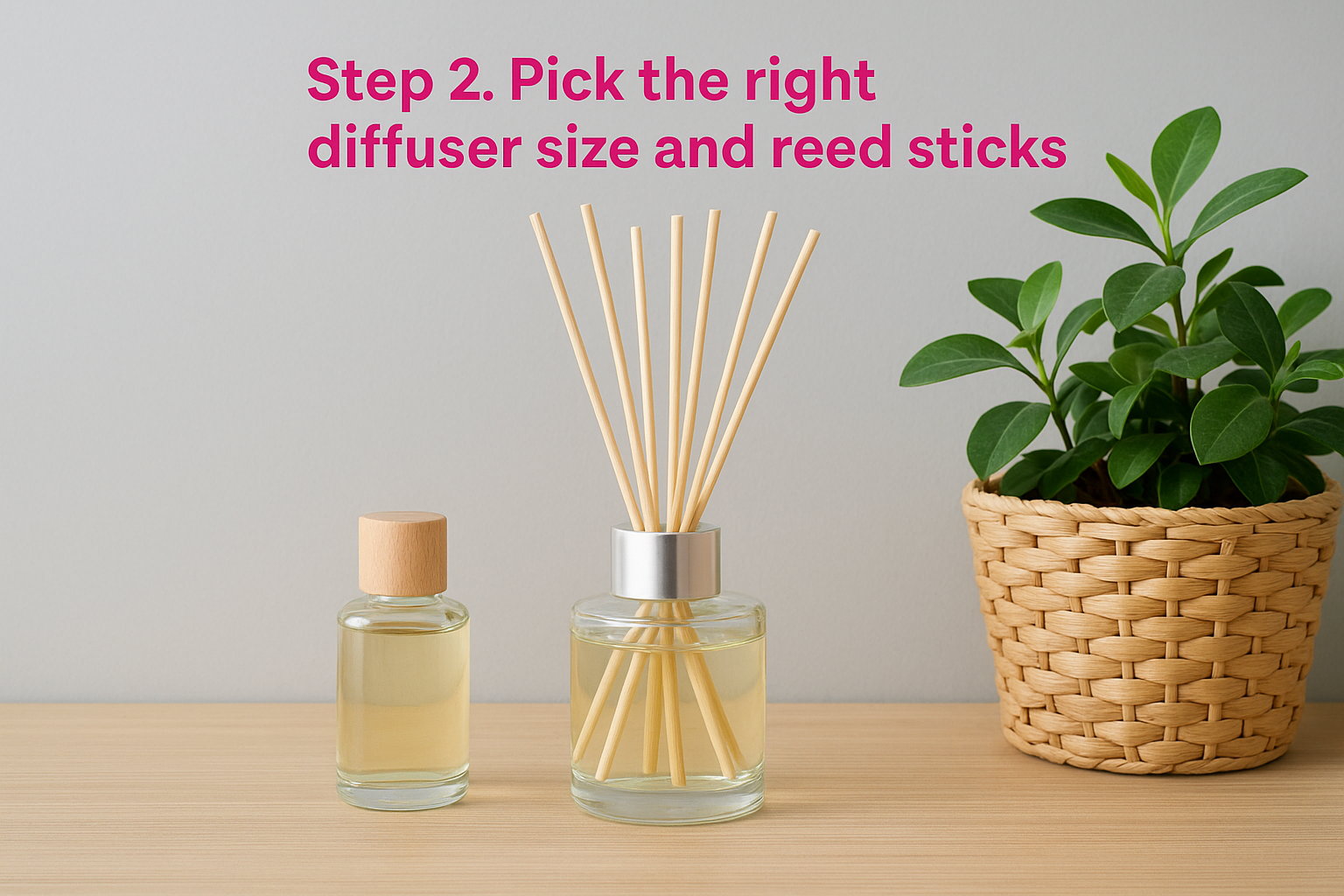
Step 2. Pick the right diffuser size and reed sticks
Bottle size should match the room, not your budget. A 100ml bottle suits a small bathroom or hallway, while a living room or open-plan kitchen needs 200ml or more to keep the fragrance noticeable across the space. Buying a bottle too small for the room is the single biggest reason people think their diffuser "isn't working" when really it was never going to fill that space in the first place.
Why reed quality matters more than most people think
Once you've got the size right, the reed sticks for diffusers you use decide whether the oil actually gets into the air. Cheap reeds are often solid or coated, which blocks the fine channels the oil needs to travel through, so the oil just sits in the bottle looking pretty and doing nothing. Proper reed diffuser sticks are made from natural rattan with an open, porous centre that draws oil up steadily by capillary action.
Cheap reeds are the most common reason a good oil never reaches the air.
Here's what to check before you buy replacement reeds or a new diffuser kit:
- Material: natural rattan, not bamboo or plastic-coated reeds
- Colour: pale, unbleached reeds absorb oil better than dyed or varnished ones
- Diameter: 3mm reeds throw scent faster; 5mm reeds last longer but scent more subtly
- Reed count: 6 to 10 reeds per 100ml bottle, more reeds mean stronger throw
Matching reed count to room size
Adjusting the number of reeds in the bottle is the easiest way to control strength without buying a different oil. Fewer reeds mean a softer, background scent that suits bedrooms or small studies. More reeds pull more oil up and out, which works better for entryways, living rooms, or anyone who simply likes a stronger throw. Sets sold as complete natural reed diffusers usually come with the right reed count already worked out for the bottle size, so if you're buying your first one, that's the simpler option rather than mixing and matching separately. Our own diffuser kits pair each bottle with rattan reeds sized specifically for it, so you're not left guessing how many sticks to add or replace.
Step 3. Set up and position your diffuser
Unpack the reeds and let them sit dry for a minute before you place them in the bottle, this stops oil dripping down the outside as you handle them. Push the full length of each reed into the bottle, then flip every reed so the wet end faces up and out into the room. That first flip matters more than people expect. Reed diffuser sticks arrive dry and take a few hours to fully saturate, so don't judge the throw until the next day.
Finding the right spot
Where you put the bottle decides how well it performs, and this is where most people get it wrong straight after buying a good one. Airflow carries scent, so a diffuser tucked in a still corner behind furniture will always underperform one sitting near movement.
A diffuser needs air to move past it, not a quiet corner to hide in.
A few placement rules we give customers every week:
- Near airflow, not direct heat: a hallway table, shelf, or console near a doorway works better than a windowsill in full sun, which can degrade the oil.
- Above ankle height: raised surfaces let warm air currents lift the scent through the room instead of pooling near the floor.
- Away from air conditioning vents: constant airflow from a vent scatters the fragrance too fast and empties the bottle early.
- Clear of soft furnishings: keep reeds away from curtains or fabric they could stain if the bottle tips.
Getting the throw right for the room
Give a new fragrant reed diffuser about 24 to 48 hours before deciding if it's strong enough, since the reeds need time to fully wick the oil through. If the scent is still too faint after two days, add two or three more reeds rather than assuming the oil is weak. Overpowering a small room is just as common a mistake, and the fix there is simple: pull a few reeds out and stand them in a glass or vase until you need them, rather than throwing away oil you'll want in a month.
Setting up an essential oil diffuser reed kit properly the first time saves you second-guessing the fragrance for weeks afterwards, so it's worth the extra ten minutes.
Step 4. Maintain and refresh the fragrance
Keeping a reed diffuser smelling strong isn't a one-off job, it's a small weekly habit. Flip each reed every seven to ten days so the saturated end goes back into the bottle and the dry end faces out again. This refreshes the surface area releasing fragrance and stops the same worn tips doing all the work while the rest of the reed sits idle. Skipping this step is the second most common reason people think their diffuser has stopped working, right after using cheap reeds in the first place.
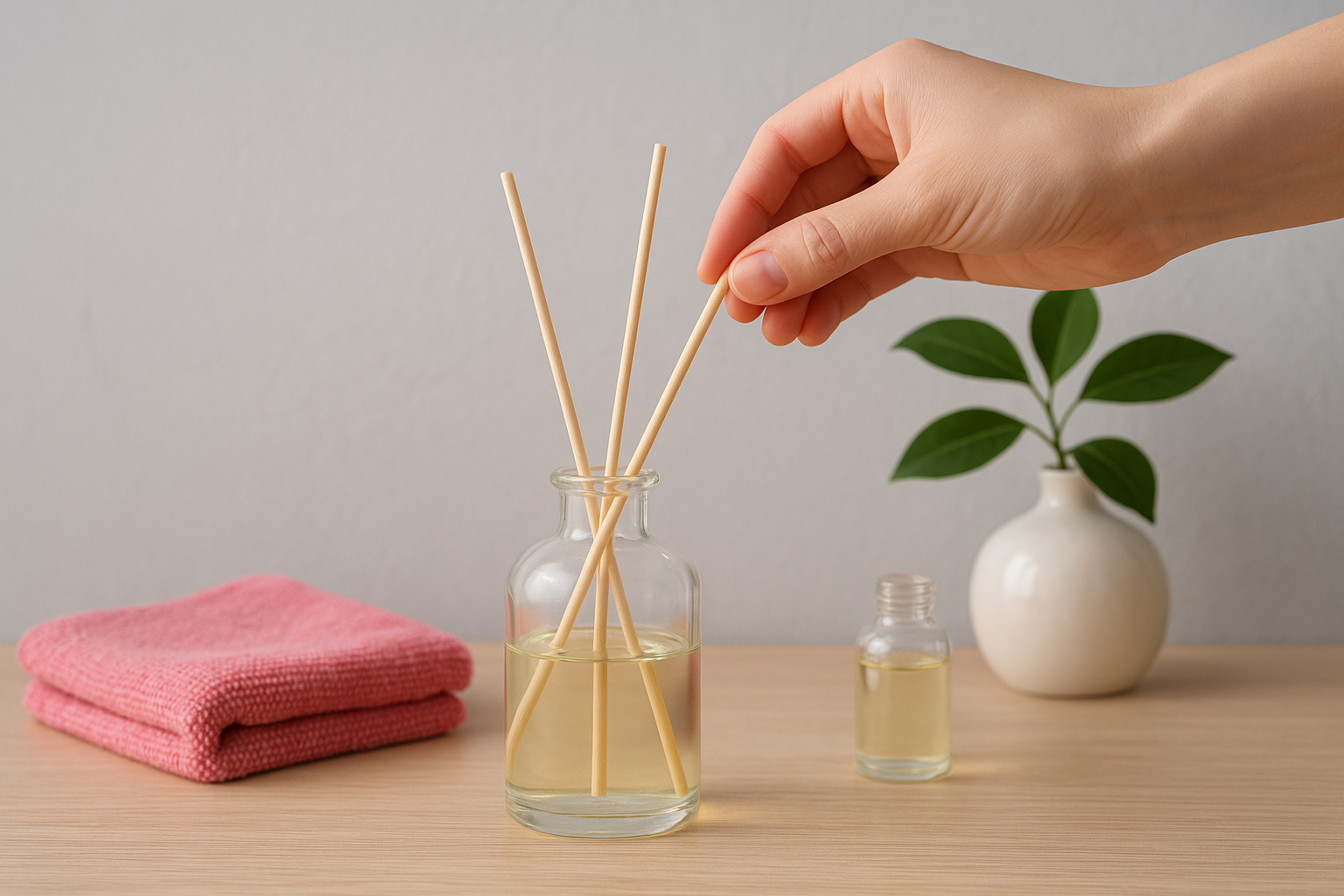
Flip the reeds weekly and the bottle will outlast most people's expectations.
A simple maintenance routine
Build the habit around something else you already do weekly, like a Sunday tidy-up, so it doesn't slip your mind.
- Flip every reed once a week, turning the wet end to face the room
- Wipe the bottle neck with a cloth if oil has pooled or dripped down the glass
- Check reed colour: if they've gone dark and stiff near the top, they're due for replacement
- Top up airflow by dusting nearby shelves so nothing blocks the scent from moving
Knowing when to replace the reeds
Reeds don't last forever, even good ones. After six to eight weeks, the porous channels inside start clogging with dust and residue, and no amount of flipping brings the throw back. Rattan reeds that feel hard or brittle rather than slightly springy have done their job and are ready to be swapped for a fresh set in the same bottle, provided there's still oil left, and if there isn't, it's easy enough to top the bottle up with fresh diffuser oil. Buying spare reed refills alongside your oil means you're never stuck waiting on a delivery when the current ones give out.
Refreshing the fragrance for a new season
Seasons change how a scent behaves, so it's worth switching things up rather than assuming one bottle suits the whole year. Warmer months call for lighter, citrus-forward oils that won't feel heavy in the heat, while cooler months suit richer, woody blends that hold their own against closed windows and heating. Rotating scents through the year also stops your nose adjusting to a fragrance until you stop noticing it at all, which happens with any diffuser left untouched too long.
Enjoying lasting fragrance at home
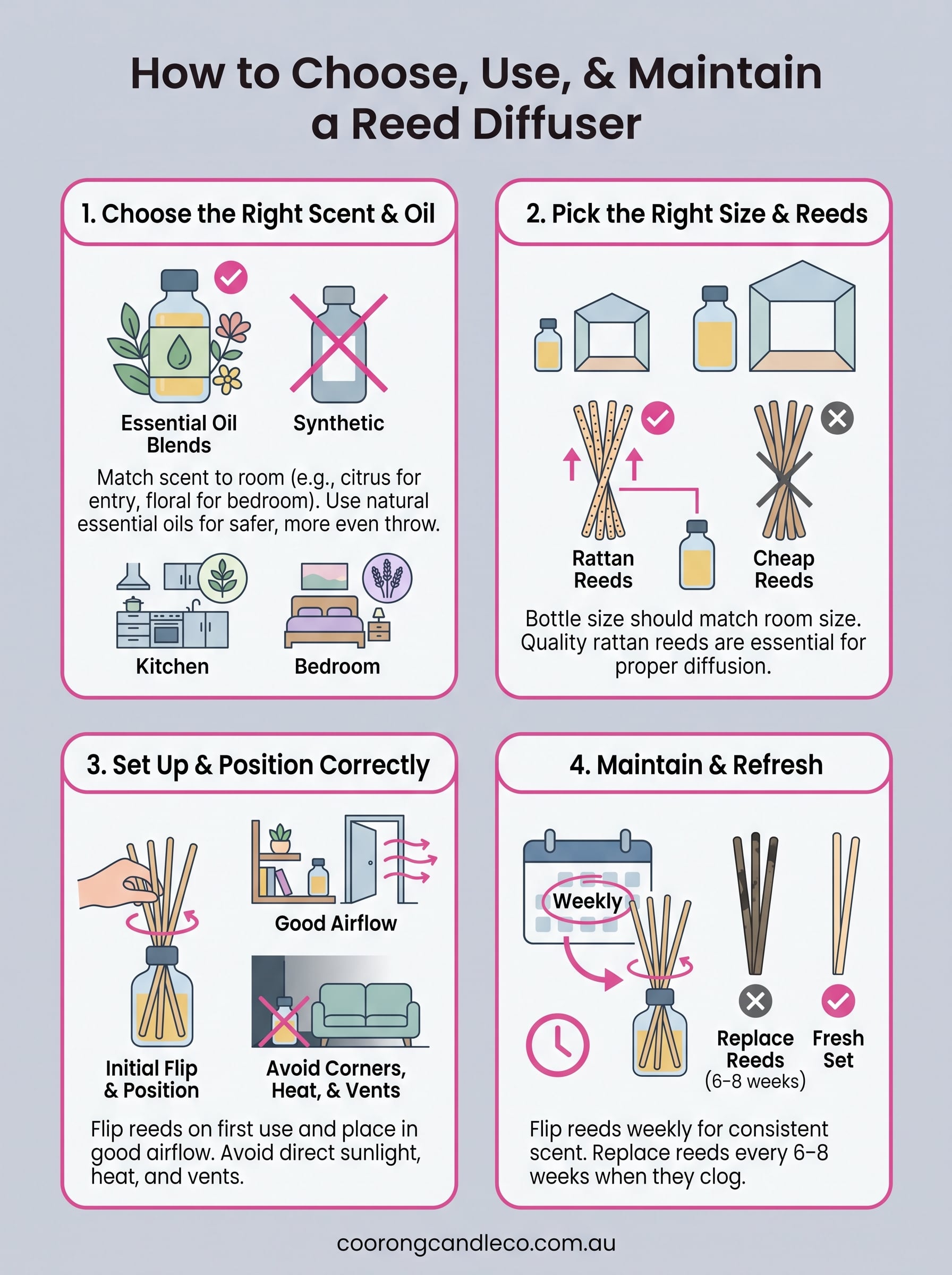
Getting a reed diffuser right comes down to four things: the right scent for the room, decent rattan reeds, sensible placement near airflow, and a weekly flip to keep it working. Skip any one of those steps and you'll end up with the same flat, faded result that put you off diffusers before. Get them all right and a single bottle will quietly scent your home for months without you thinking about it again.
Now that you know what separates a natural reed diffuser that lasts from one that dies by week three, the only thing left is picking a fragrance that actually suits your home. We hand-blend ours in small batches using scents drawn from South Australian landscapes, from coastal eucalyptus to warm Barossa notes, so the throw stays honest for the full life of the bottle. Have a look through our hand-blended natural reed diffusers and find the one that fits your space.