
If you've ever stood in front of two bottles, one labelled "fragrance oil," the other "essential oil", and wondered what actually separates them, you're not alone. The fragrance oils vs essential oils debate matters whether you're buying candles, making soap, filling a diffuser, or choosing skincare products. These two oil types differ in origin, scent behaviour, safety profile, and therapeutic potential, and picking the wrong one for your purpose can mean wasted money or underwhelming results.
At Coorong Candle Co., we work with both. Our hand-poured soy candles are crafted in South Australia using ingredients chosen for scent throw, safety, and longevity, so understanding these oils isn't just academic for us; it's central to every batch we make. We've put together this guide to share what we've learned through years of hands-on formulation.
Below, you'll find a straightforward breakdown of how fragrance oils and essential oils are made, where each one excels, and what to watch out for when it comes to safety and application. By the end, you'll have the clarity to make confident choices for your home, your body, or your next creative project.
Why the difference matters for candles and skincare
When you're shopping for a candle or choosing a face oil, the type of oil used in the formula changes everything from how the product performs to how your body responds to it. The fragrance oils vs essential oils distinction isn't just a labelling detail; it shapes scent strength, skin safety, and ingredient integrity across every product category. Getting this wrong in formulation or in purchasing leads to candles that barely fill a room, or skincare that irritates rather than soothes.
How oil type affects candle performance
In candle making, scent throw refers to how far and how strongly a fragrance travels through a space, and the oil you use directly controls this. Fragrance oils are engineered to bind well with wax and release scent efficiently as the candle heats up, which makes them a reliable choice for strong, consistent performance in soy and paraffin candles alike. Essential oils, on the other hand, have lower flash points, meaning many of them evaporate before the wax fully melts, which reduces their scent throw significantly.
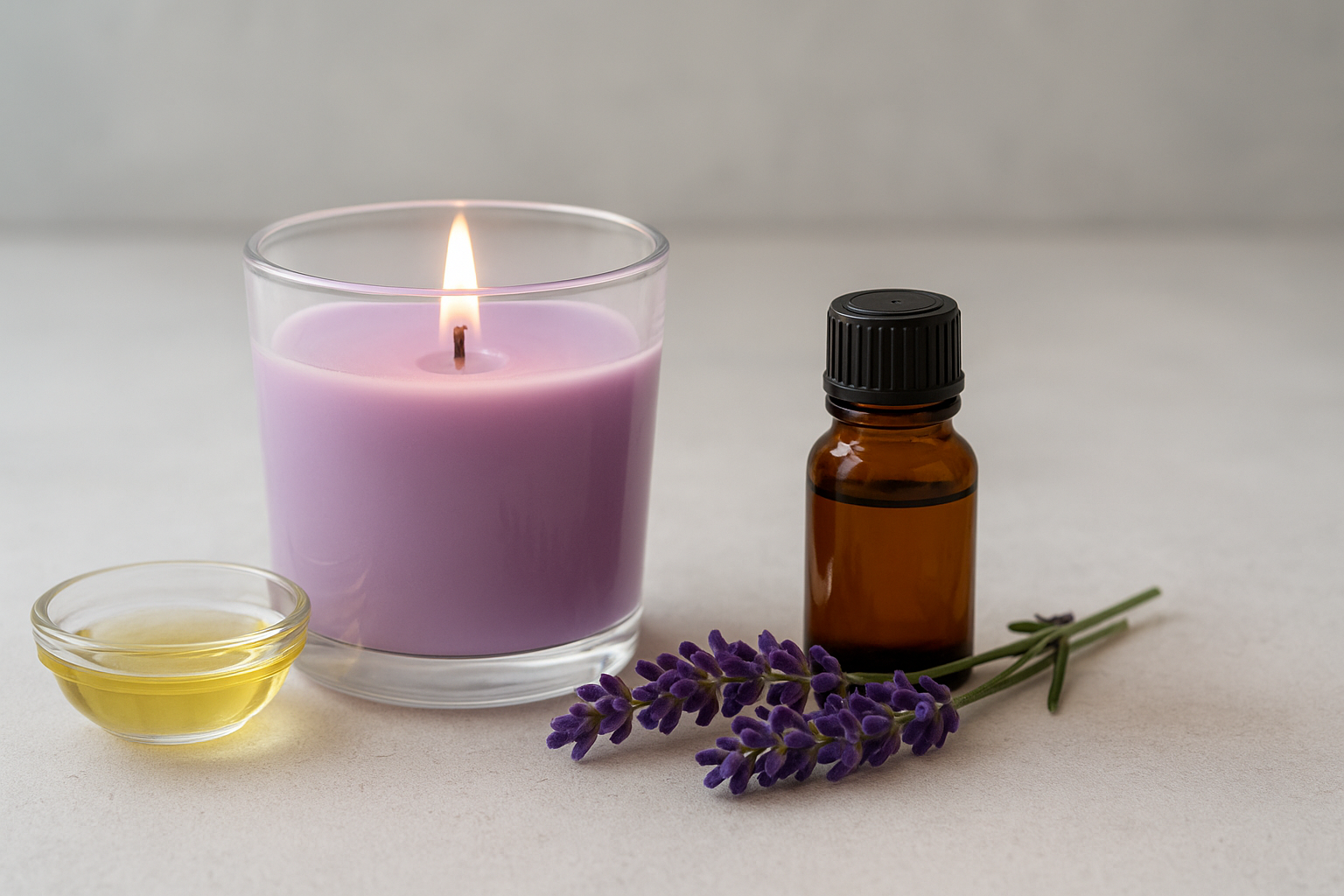
The flash point of an oil determines the temperature at which it begins to evaporate, and most essential oils have flash points too low to survive a full candle burn cycle intact.
Candle makers who insist on using only essential oils often need to use much higher concentrations to achieve comparable results, which pushes the cost up considerably. If you've ever bought a "pure essential oil candle" that smelled wonderful in the jar but barely scented your room once lit, this is almost certainly why.
How oil type affects skincare results
In skincare and bath products, the question shifts from scent performance to skin interaction. Essential oils contain active compounds such as terpenes and phenols that engage with your skin at a biological level, which can support benefits like calming inflammation or balancing oil production. Fragrance oils are primarily designed to smell appealing, and many contain synthetic compounds that offer no skin benefit and can trigger sensitivity reactions in some people.
That doesn't mean fragrance oils have no place in body care. Bath bombs and soap can carry them well when concentration stays within safe limits. For leave-on products like moisturisers or serums that sit on your skin for hours, though, the composition of the oil matters far more than it does in a rinse-off or heat-activated product.
What fragrance oils are and how they are made
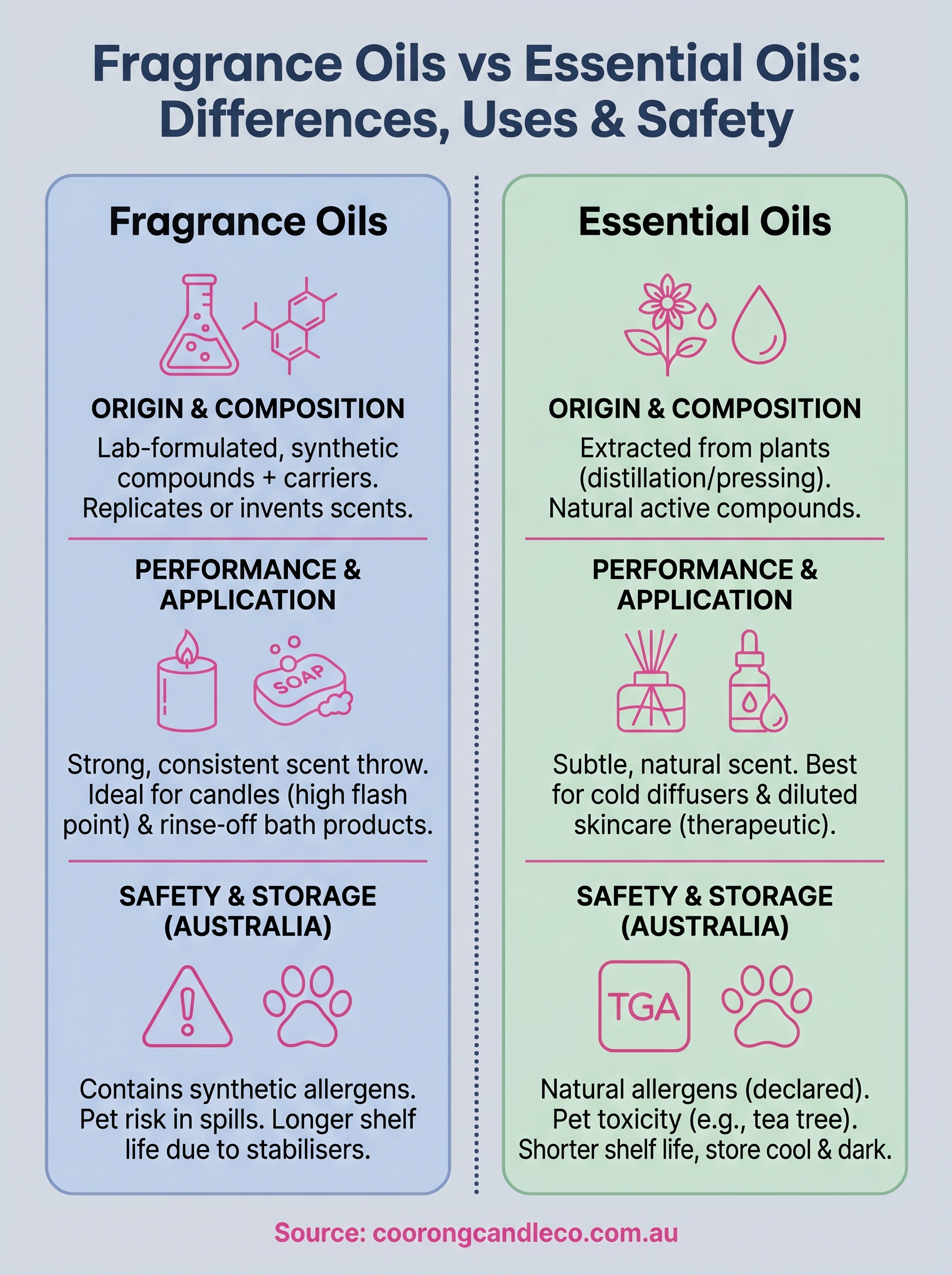
Fragrance oils are synthetically produced or blended aromatic compounds designed to replicate, enhance, or entirely invent scents that nature may or may not produce. Unlike essential oils, which come directly from plant material, fragrance oils are formulated in a laboratory by combining aroma chemicals, natural isolates, and sometimes a small percentage of genuine essential oils into a carefully balanced blend. This laboratory origin gives manufacturers precise, repeatable control over the final scent profile in a way that natural sources simply cannot match.
The ingredients inside fragrance oils
Most fragrance oils contain a mix of synthetic aroma chemicals and carrier substances such as dipropylene glycol or isopropyl myristate, which dilute the concentrate and improve how it blends with wax, soap, or lotion bases. Many of the synthetic components come from petroleum-based chemical processes, though some are created through modification of natural raw materials such as wood pulp or citrus peel.
Because fragrance oil formulas are often protected as trade secrets, manufacturers are not legally required to disclose every ingredient, which is worth knowing if you have sensitivities or allergies.
These oils can also reproduce scents that have no direct natural source, such as "ocean breeze" or "fresh linen," and can mimic expensive natural materials like rose absolute or oud at a fraction of the cost. That versatility explains why fragrance oils appear across candles, soaps, cleaning products, and air fresheners alike.
Why candle makers reach for them
When you're weighing up fragrance oils vs essential oils for candle making, fragrance oils win on consistency and scent throw. Their higher flash points mean they survive a full candle burn cycle without evaporating too early, and their engineered formulas hold up reliably across different soy wax blends, pour temperatures, and room sizes.
What essential oils are and how they are made
Essential oils are concentrated aromatic compounds extracted directly from plant material, including flowers, leaves, bark, roots, and rinds. Unlike fragrance oils, which are engineered in a laboratory, essential oils come from real botanical sources through physical extraction processes that preserve the plant's naturally occurring chemistry. That direct connection to a plant is what gives them their well-known reputation for therapeutic properties.
How extraction methods work
The most common production method is steam distillation, where pressurised steam passes through plant material, drawing out the volatile aromatic compounds. The steam and oil vapour then cool and separate, leaving behind a concentrated essential oil. For citrus oils like lemon or sweet orange, manufacturers use cold pressing instead, simply pressing the rind to release its oils mechanically without any heat involved.
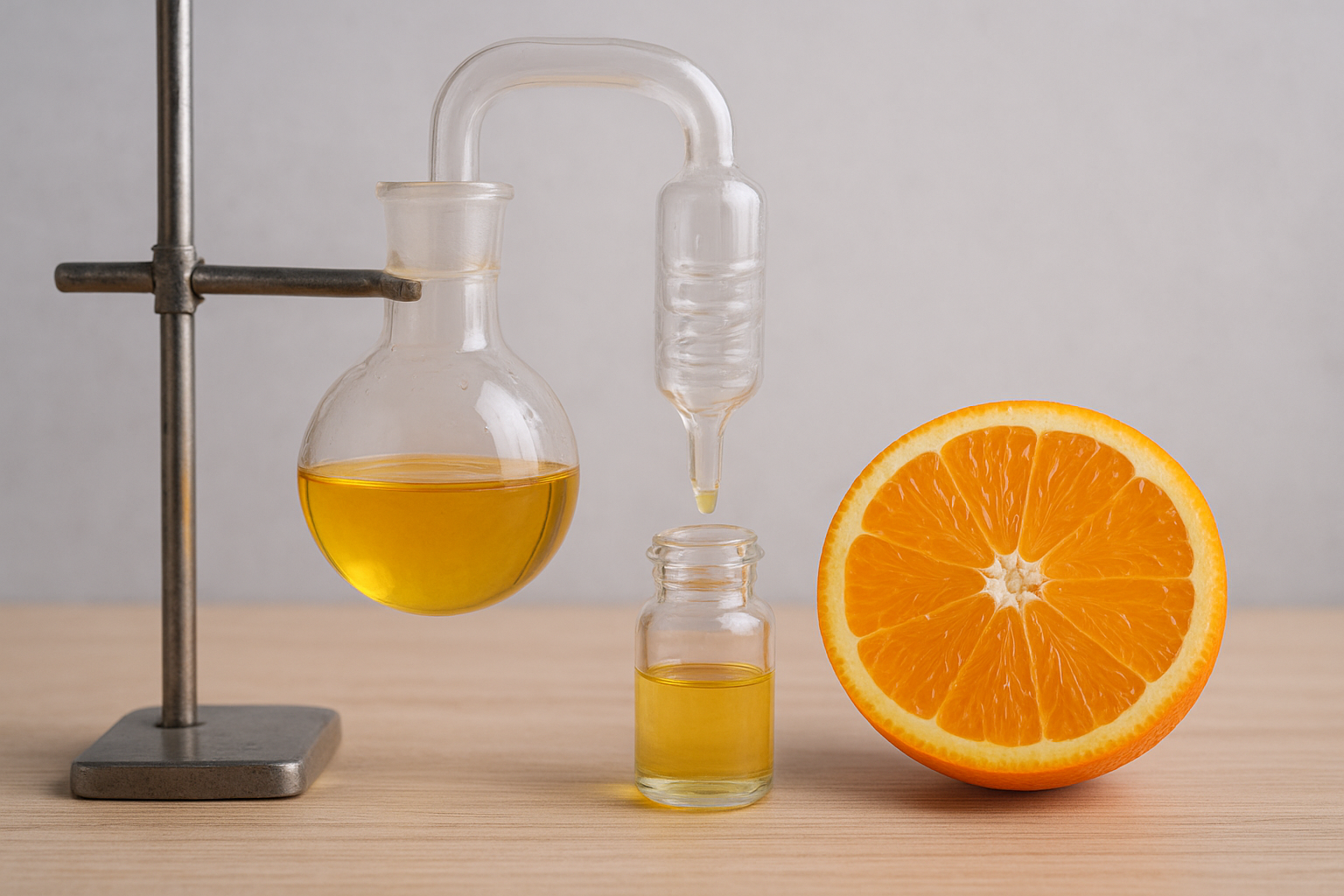
Some of the most expensive essential oils, like rose or jasmine absolute, require solvent extraction because their delicate compounds break down under heat, which helps explain their high retail price compared to most fragrance oils.
What makes essential oils chemically distinct
When you compare fragrance oils vs essential oils at a chemical level, the difference becomes clear. Essential oils contain naturally occurring active compounds such as linalool, limonene, and eucalyptol, which interact with the body in measurable ways. These compounds are not added by a formulator; they are produced by the plant itself and vary from harvest to harvest depending on soil, climate, and growing conditions.
That natural variability is why a bottle of lavender essential oil grown in France smells subtly different from one produced in Tasmania, and why batch consistency is harder to guarantee compared to a synthetically produced fragrance oil. For your purchasing decisions, this variability is worth factoring in, particularly if you rely on a specific scent profile for a recipe or routine.
How to choose the right oil for each use
Your decision comes down to what you want the oil to do and the specific format you're working with. The fragrance oils vs essential oils comparison stops being theoretical the moment you're standing in front of a recipe or a product label, so breaking the choice down by use case makes it far more practical than trying to declare one type universally better than the other.
For candles and home fragrance
If you're buying candles or making your own, fragrance oils are the stronger performer in almost every scenario. Their higher flash points allow them to survive the heat of a burning candle without evaporating prematurely, and their engineered formulas deliver a consistent, room-filling scent across multiple uses.
If a candle is marketed as using only pure essential oils, check the size and oil concentration before buying; a small candle with a low oil load will rarely scent a full room effectively.
Essential oils work well in cold diffusers and reed diffusers, where no heat is involved. In that context, their aromatic compounds release slowly without breaking down, giving you a gentler, more authentic scent experience throughout the day.
For skincare and bath products
When a product sits on your skin for extended periods, the chemistry of the oil matters more than the scent alone. Essential oils bring active compounds that can support skin health, but you must dilute them properly in a carrier oil before any direct skin contact.
Fragrance oils suit rinse-off products like soap and bath bombs, where skin exposure is brief. For leave-on products such as body lotions or face serums, choose essential oils within safe concentration limits, and always patch test on a small area before applying more broadly.
Safety, allergens, pets and storage in Australia
Both fragrance oils and essential oils carry safety considerations that vary depending on how you use them, who is in your home, and how Australian conditions affect product shelf life. When comparing fragrance oils vs essential oils, neither type is automatically safer; the risks shift based on concentration, application, and individual sensitivity.
Allergens and skin sensitivity
Fragrance oils are a leading cause of contact dermatitis in cosmetic products because their synthetic compounds can trigger reactions that are hard to trace back to a single ingredient. Essential oils also contain naturally occurring allergens, including linalool and limonene, which must be declared on product labels under Australian cosmetic regulations if they exceed certain thresholds.
The Therapeutic Goods Administration (TGA) in Australia classifies some essential oils as therapeutic goods, meaning higher-concentration products can carry stricter labelling and safety requirements.
Always patch test any new oil product on a small area of skin before broader application, regardless of whether the formula uses synthetic or natural aromatic compounds.
Pets and essential oils
Many essential oils are toxic to cats and dogs, including tea tree, eucalyptus, and peppermint. Your pet's liver processes aromatic compounds differently from yours, so even diffuser use in a shared space can cause respiratory distress or neurological symptoms. Keep diffusers in rooms your pets cannot access freely.
Fragrance oils carry similar risks if a pet contacts a concentrated spill. Store both types in sealed containers on high shelves well out of reach.
Storing your oils in Australian conditions
Australia's high summer temperatures accelerate oxidation in both oil types, shortening shelf life considerably. Store your oils in dark glass bottles away from direct sunlight, ideally in a cool cupboard or pantry.
Most essential oils last one to three years when stored correctly, while fragrance oils often last longer due to synthetic stabilisers. Check each bottle regularly for changes in colour or scent as early signs of degradation.
Final thoughts
The fragrance oils vs essential oils debate doesn't have a single winner. Each oil type has a clear role, and your best results come from matching the right oil to the right application. Use fragrance oils when you need consistent scent throw and longevity, particularly in candles and rinse-off bath products. Reach for essential oils when you want active botanical compounds and a gentler, more natural aromatic experience in cold diffusers or diluted skincare.
At Coorong Candle Co., we put these principles into practice with every product we make in South Australia. Whether you're looking for a hand-poured soy candle, a reed diffuser, or a bath bomb crafted from naturally sourced ingredients, our range is built around careful formulation choices that suit your space and your skin. Browse our handmade soy candles and home fragrance products to find something made with real care.